This page gathers everything a newsroom outside Italy needs to cover the Dimoranza story: a press kit in English, a ready-to-publish release and interview, every source with a link, the official documents with English summaries, and images. All of it downloads without asking.
Every text here may be published in full or in part, with or without attribution. The author grew up in Philadelphia, speaks English and is available for interviews by phone, video call or in person in Maida. Replies within the day, weekends included.
The story in thirty seconds
The word dimoranza appears in the first edition of the Vocabolario degli Accademici della Crusca, Venice 1612, and then fell out of use. It was brought back by Luca Cervadoro, a local historian from Maida, a town of 4,000 in Calabria, whose essay «DIMORANZA. Manifesto per una Civiltà Ubiqua» turned its meaning inside out: no longer a person dwelling in a place, but a place that goes on dwelling in a person, and in that person's children and grandchildren, even when they have never seen it.
On 29 July 2026 the Town Council of Maida unanimously approved, majority and opposition together, Resolution no. 25 «Maida, Città della Dimoranza», creating a Municipal Register of Dimoranti, a Certificate of Dimoranza and a Day of the Dimorante: symbolic instruments, at no cost to the budget, addressed to the estimated 30,000 descendants of Maida's emigrants around the world. The first application came from Youngstown, Ohio.
The word has been submitted to the Accademia della Crusca and to Treccani with a dossier of attestations, and on 30 September 2026 Treccani published the definition on its website, stating it stands ready to record the word among new entries once attestations spread beyond Calabria; the Ministry of Culture and the Calabria Region have a project on the table; the Italian National Commission for UNESCO has indicated the path for cataloguing it as intangible heritage. On 14 September 2026 La Voce di New York told the story in English and Italian, linking it to Gay Talese, whose father emigrated to Ocean City, New Jersey, from Maida.
Why it matters outside Italy
About sixty million people of Italian descent live outside Italy, and in 2025 Italy narrowed citizenship by descent to two generations. Dimoranza arrives in that gap. It offers no passport. It offers what a town can give on its own: a name for the bond, a register that counts you, a certificate that says the place has not forgotten you. The word has no English equivalent: not nostalgia, which belongs to the one who remembers, nor homesickness, which needs a home one has lived in. La Voce di New York kept it in Italian. You can too.
Download the press kit (PDF, 15 pages)For the press
All texts in this section may be published freely, in full or in part, with no byline or attribution requirements.
International press kit
Fifteen pages: the story in thirty seconds, why it matters abroad, a press release, eleven dated and verifiable facts, a ten-question interview with the author, an adaptable 600-word feature, quotes, biography, and story angles for the United States, Canada, Australia, Switzerland and Germany, Argentina and Brazil, and the United Kingdom.
Download the kit (PDF)Press release
A standalone release in English with notes for editors on how to handle the word, the pronunciation, and what may and may not be claimed. Editable Word file and PDF.
Word file PDFVerifiable sources and links
Every claim in the kit with the link that lets a fact-checker verify it in one click: international and Italian coverage, the 1612 dictionary entry, the Treccani entry, the «restanza» precedent, and the official documents.
Download the sources (PDF)The interview
Ten questions and ten answers reviewed and approved by the author, publishable as a standalone piece under your byline or usable as a source of quotes. The interview is in the press kit, section 5.
In the press kit (PDF)Official documents
Each file opens with a one-page English summary, followed by the original document in Italian, reproduced in full and unaltered.
Council Resolution no. 25, «Maida, Città della Dimoranza»
The complete file of the resolution of 29 July 2026, approved unanimously: the act, Annex A (the regulation) and Annex B (the explanatory report), with the transmission to the Region, ANCI and the Prefecture.
Download the resolution (PDF)Regulation of the Register of Dimoranti
Nine articles, summarised one by one in English. Written so that any municipality, in any country, could adopt an equivalent text in a single session, at no cost and with no legal side effects.
Download the regulation (PDF)The correspondence with the Accademia della Crusca
The Academy's reply of 24 September 2026 (protocol no. 2869/2026) and the author's technical reply of 25 September, which cites the «restanza» precedent and asks what criteria the «new words» section applies. With an English summary of both letters.
Download the letters (PDF)Treccani's reply
On 30 September 2026 the Istituto della Enciclopedia Italiana published the submission, definition included, on its Lingua italiana pages, replying that the old word now resurfaces «with another meaning, in our reader's proposal» and that the Institute stands ready to record it among new words once attestations spread beyond Calabria. Full copy of the page, in Italian; the original is on the Treccani website.
Download the page (PDF, Italian) Read the original on treccani.itThe UNESCO Commission and the ICCD path
The reply of the Italian National Commission for UNESCO of 28 September 2026 and the author's first letter to the Ministry of Culture's cataloguing institute. A path indicated, not a recognition: the summary says exactly what may be claimed.
Download the correspondence (PDF)The Network of Municipalities of Dimoranza
The programme presented to ANCI Calabria in August 2026: why no Italian municipality knows how many descendants it has, what the 2025 citizenship decree changed, and how every town could adopt the Maida model at almost no cost.
Download the project (PDF)The essay «Lo Ius Loci Latente»
The chapter of the book that provides the legal and philosophical basis for the Council resolution: a third principle of belonging beside ius soli and ius sanguinis, founded on memory and roots. In Italian, with an English summary.
Download the essay (PDF)Images
Free for editorial use. Click an image to download it, or take the whole set with the buttons below.
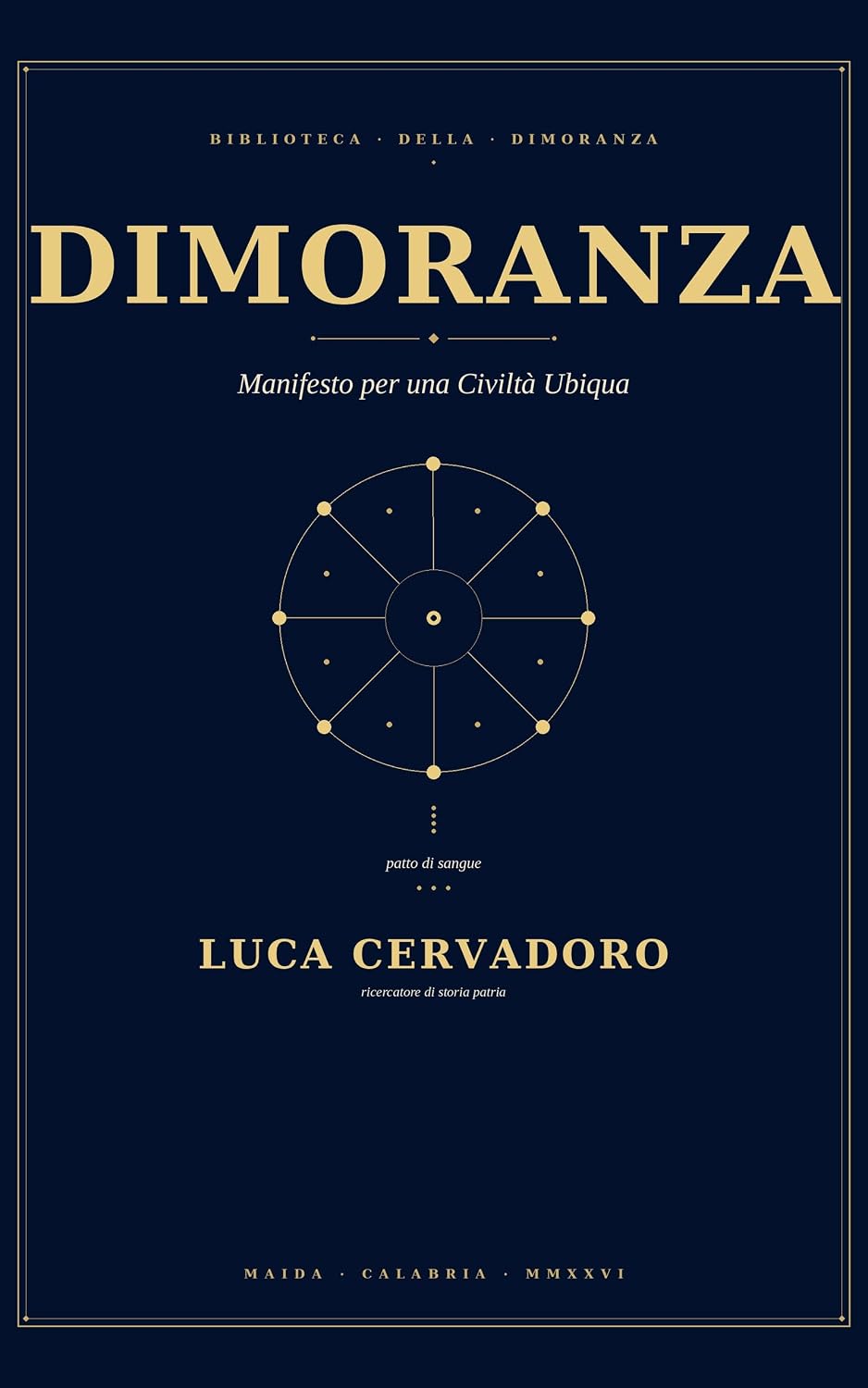
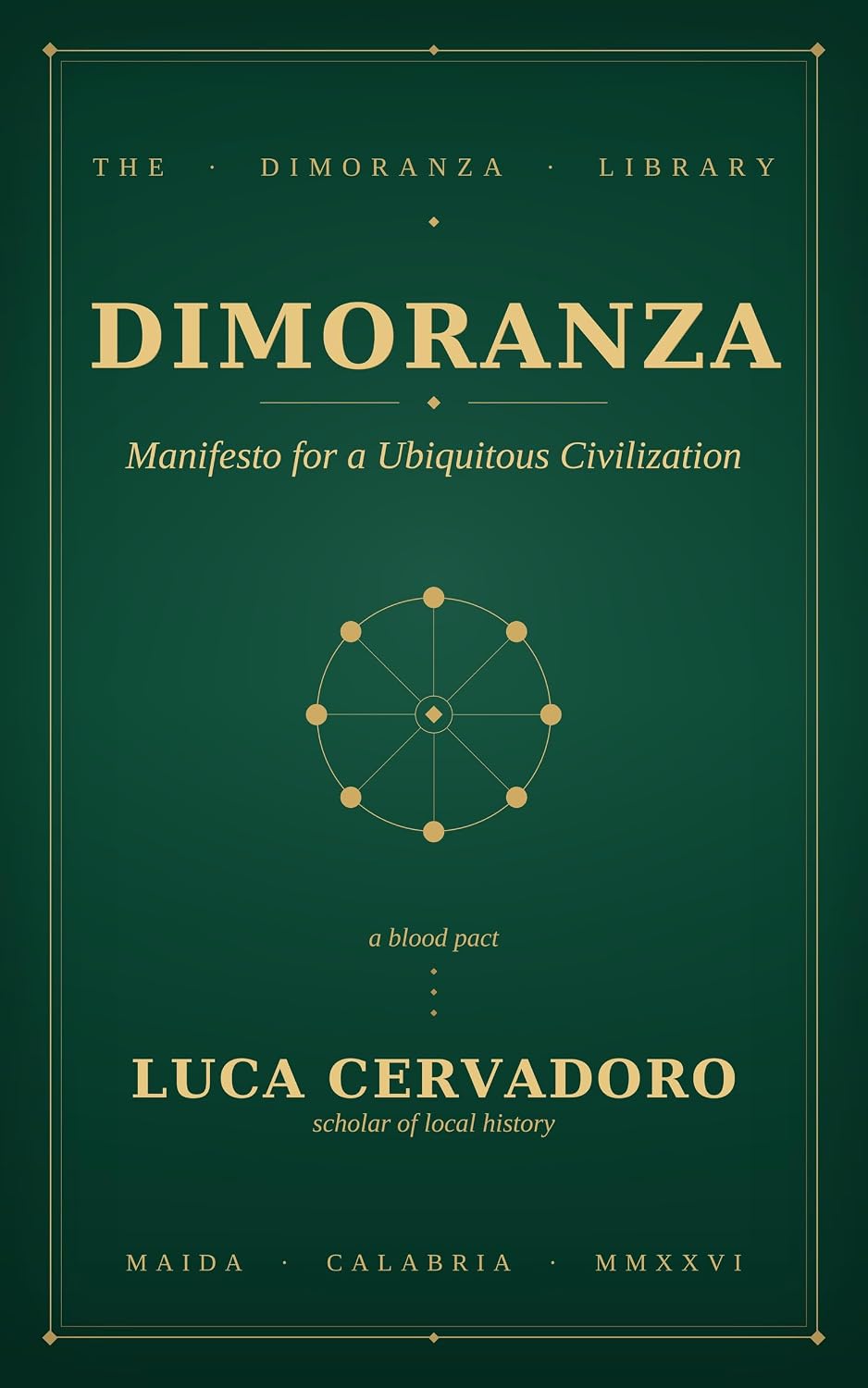
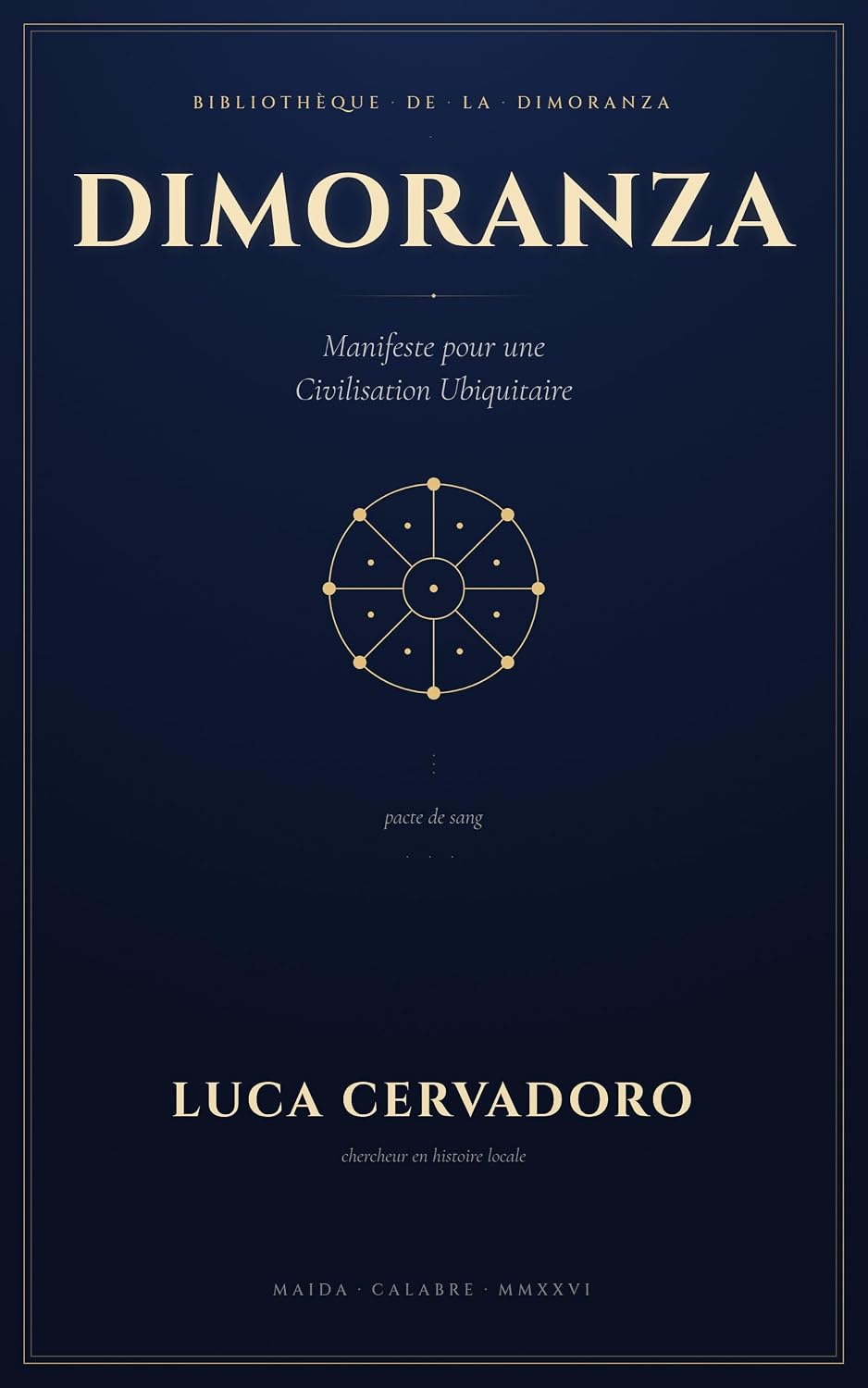
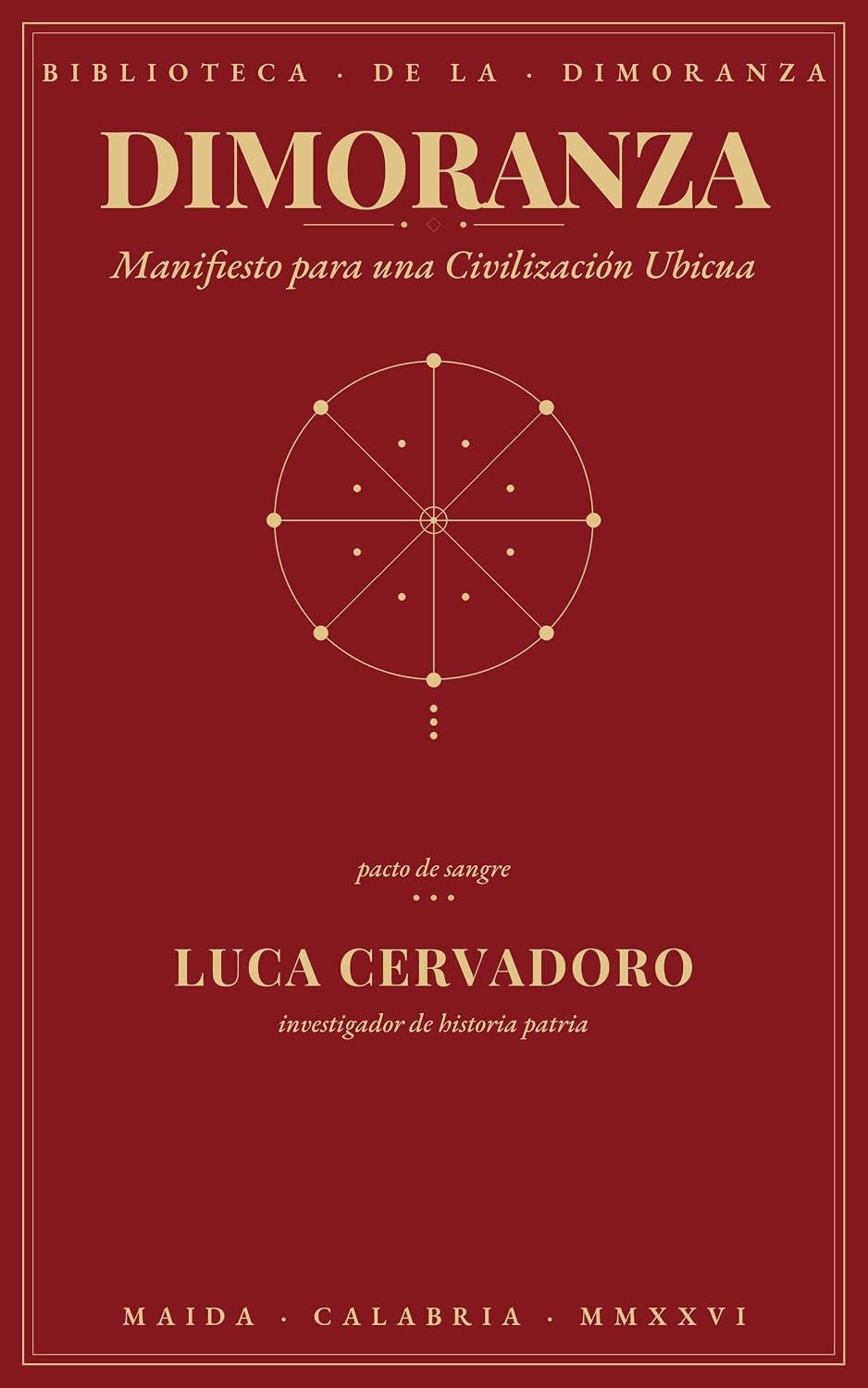
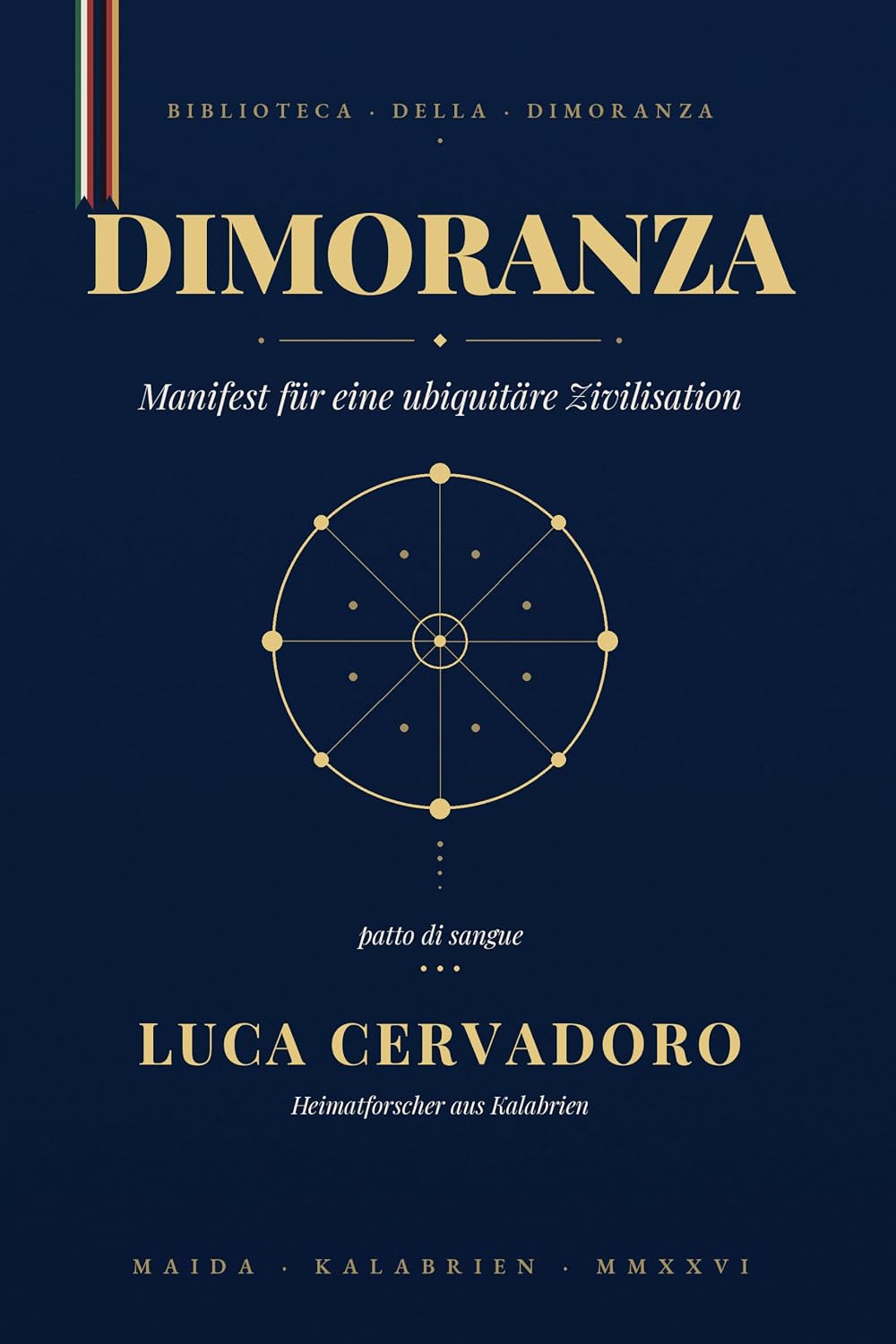
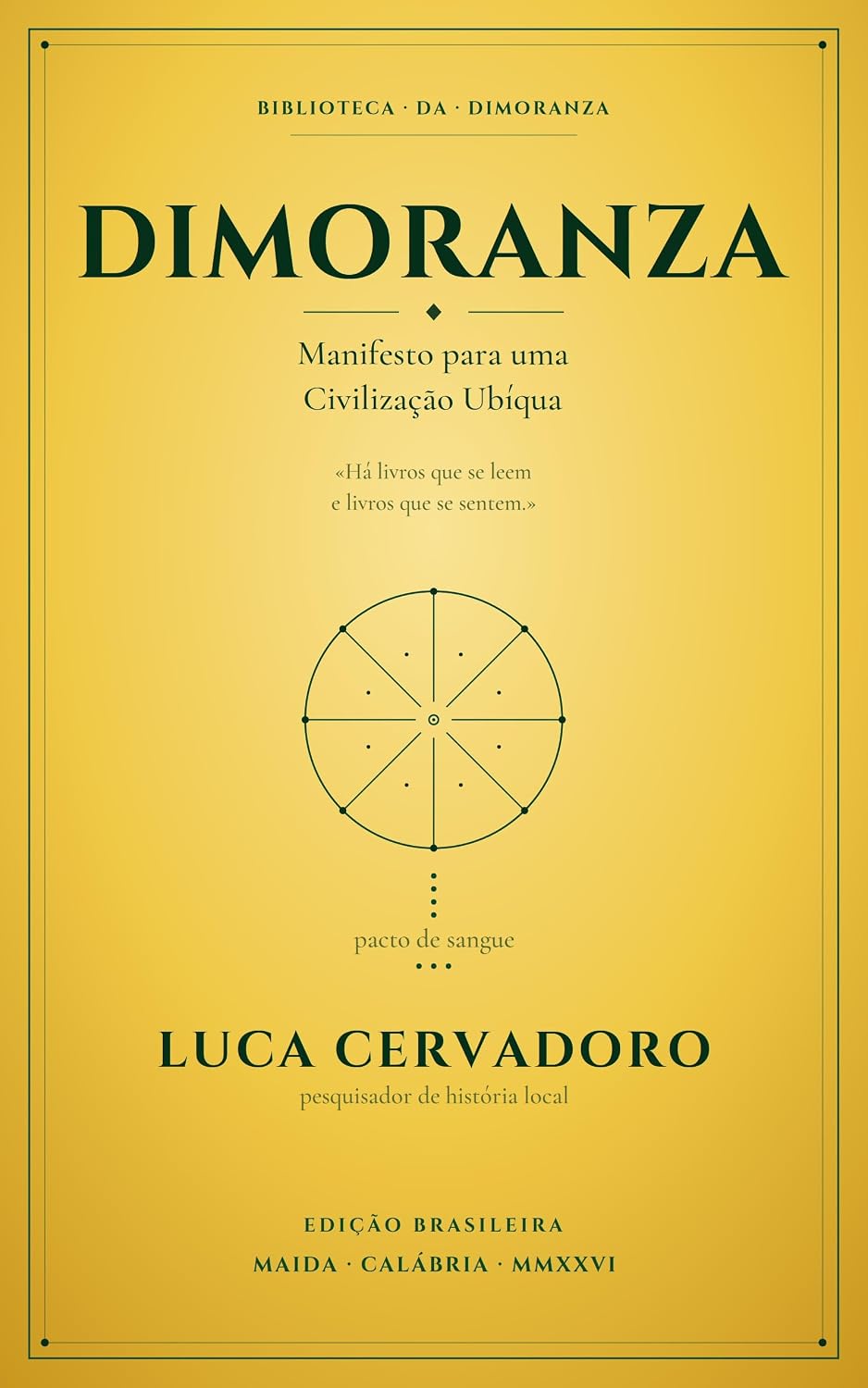
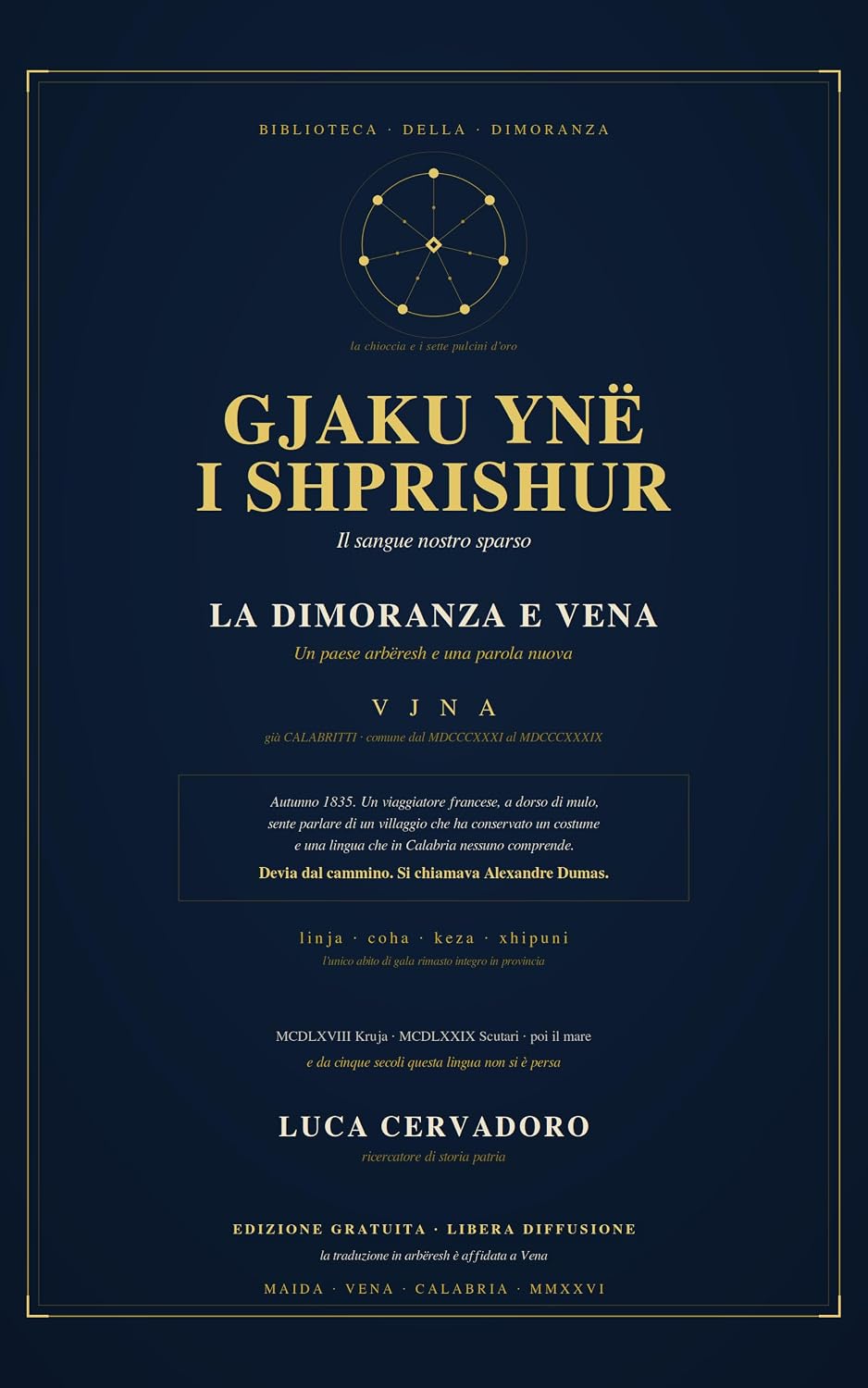
The last one is the small volume in Arbëresh, the Albanian minority language of Calabria, dedicated to the village of Vena. It is not a seventh edition of the book.
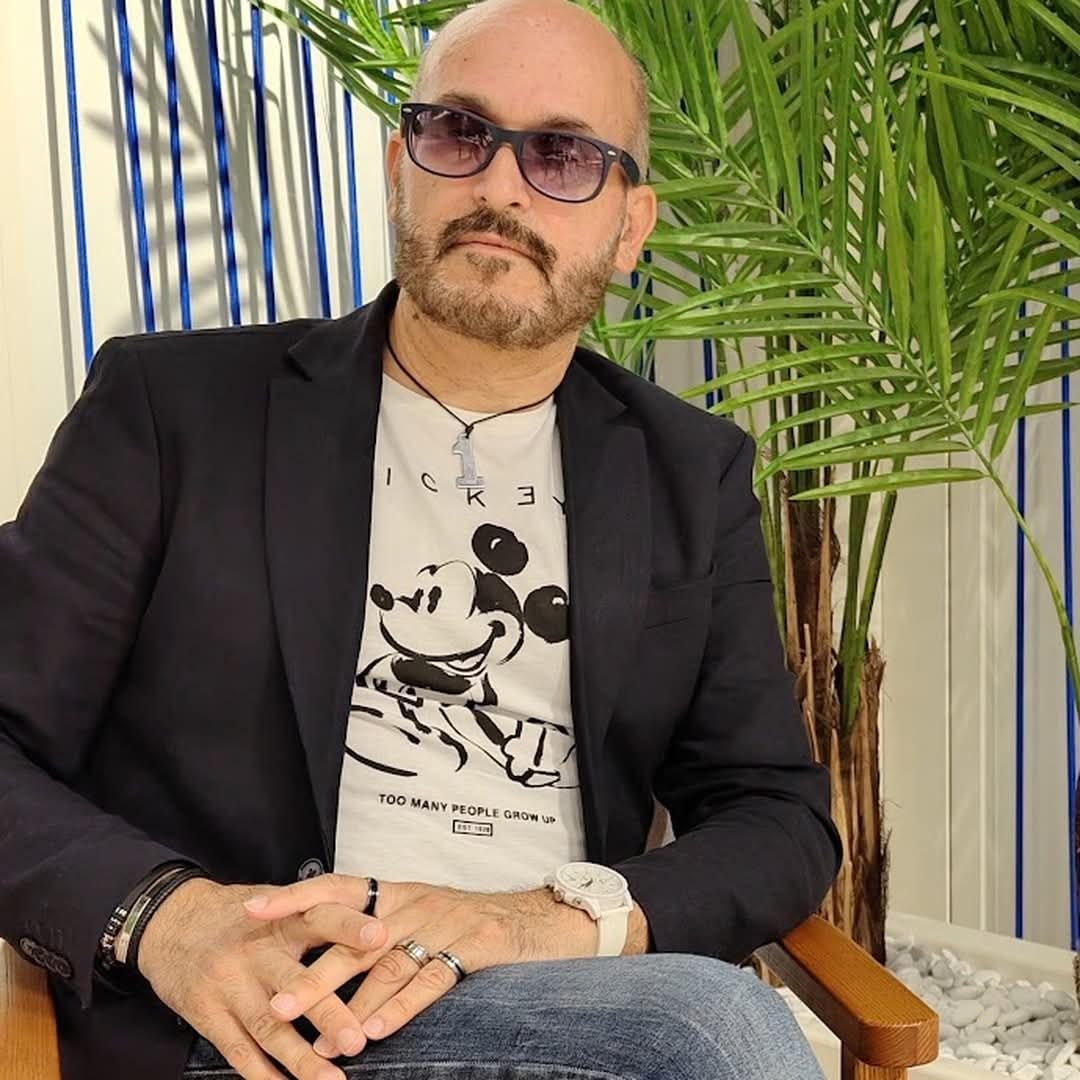
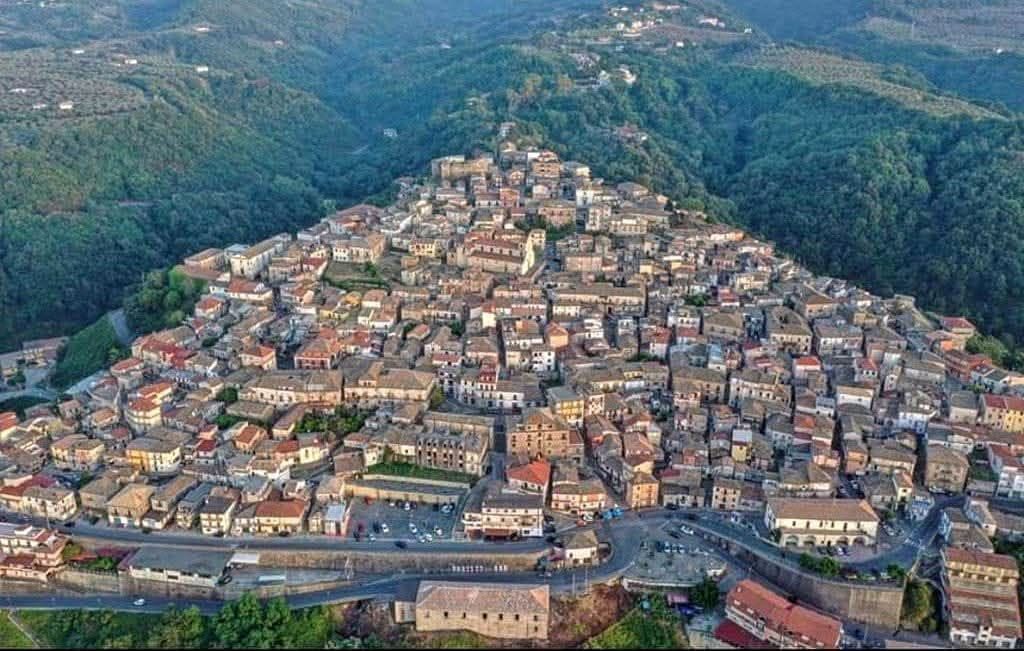
The aerial view of Maida comes from the web and is not the project's own photograph.
All covers
The six editions plus the Arbëresh volume, seven files, print and web ready.
Download the covers (ZIP)All photographs
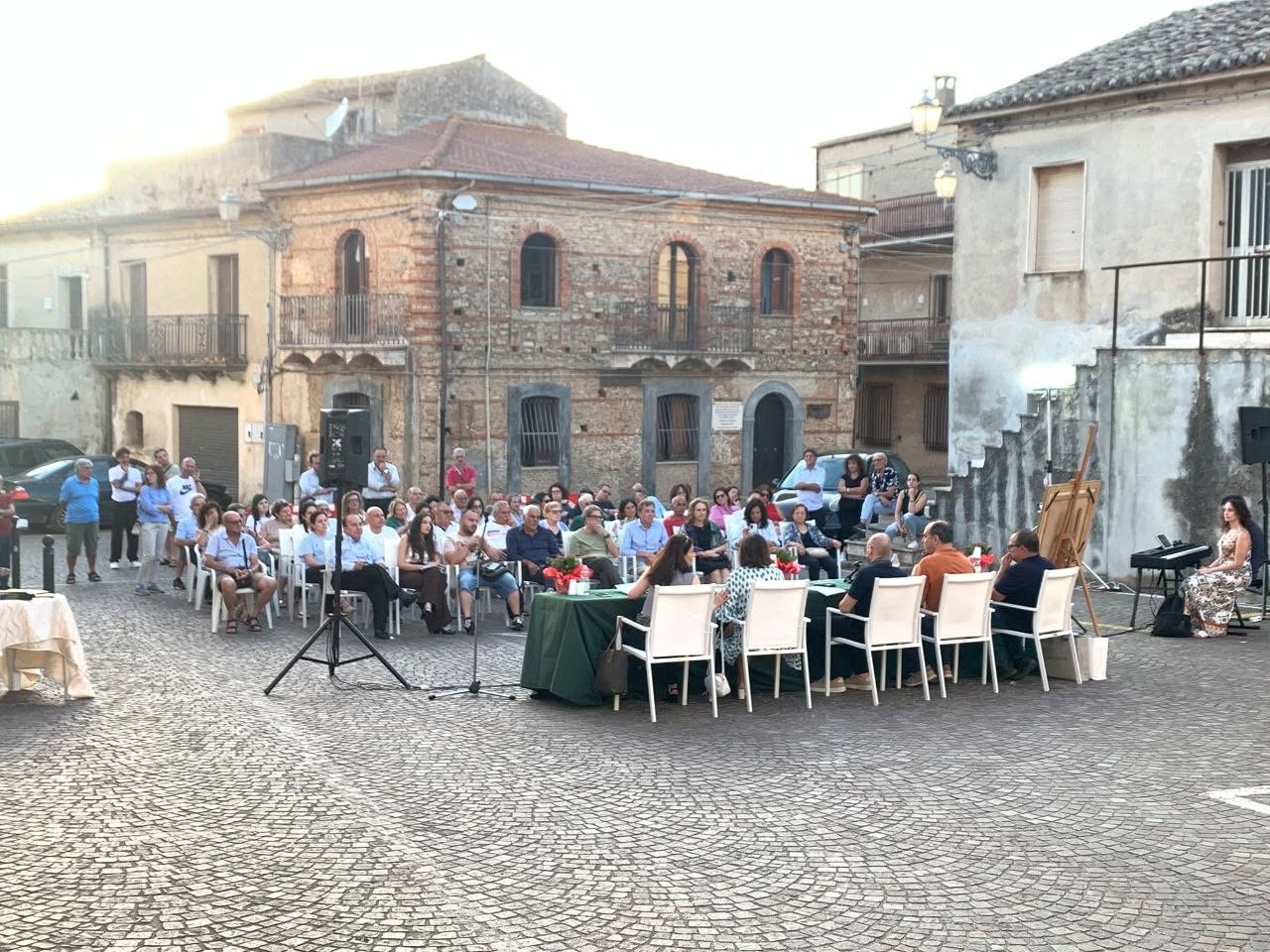
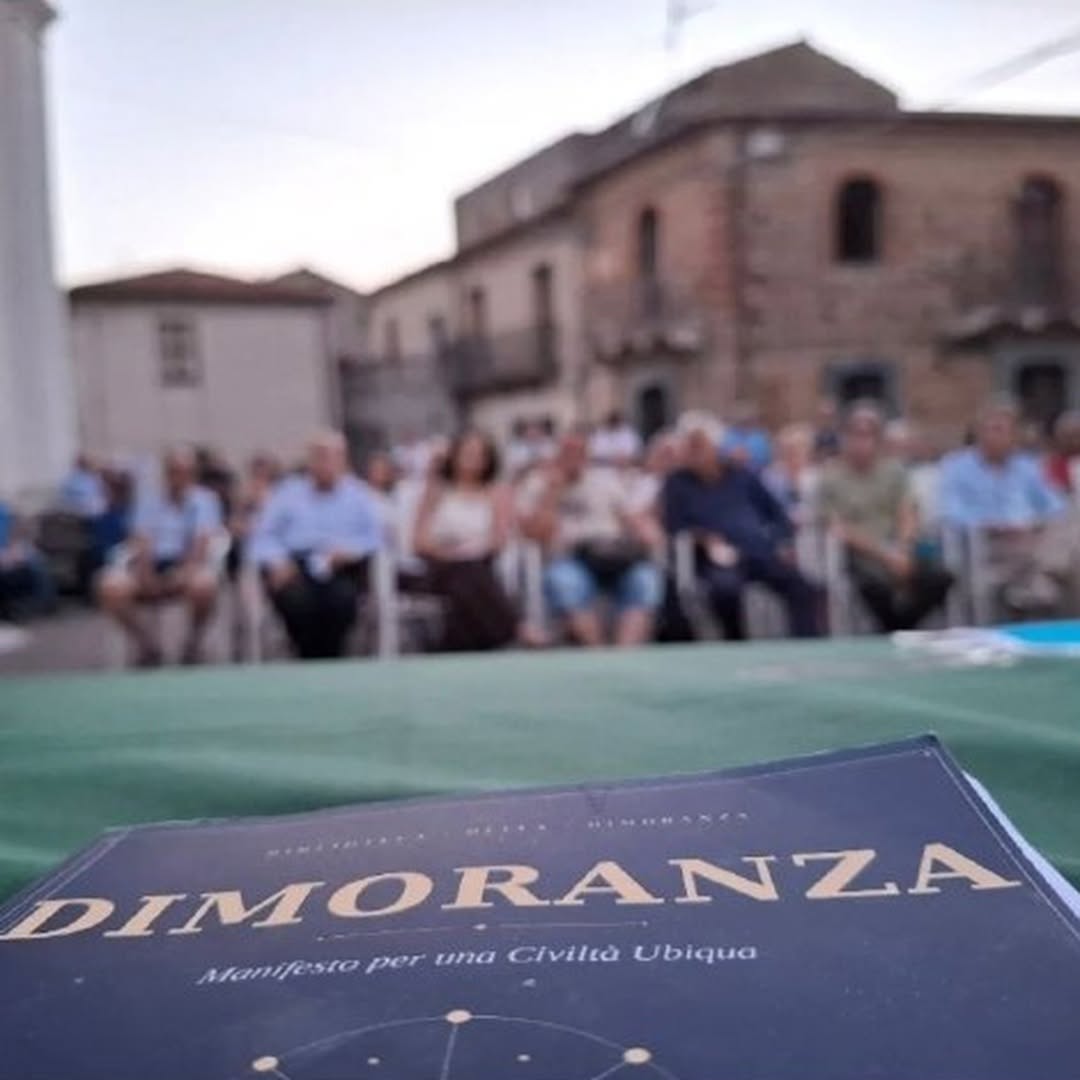
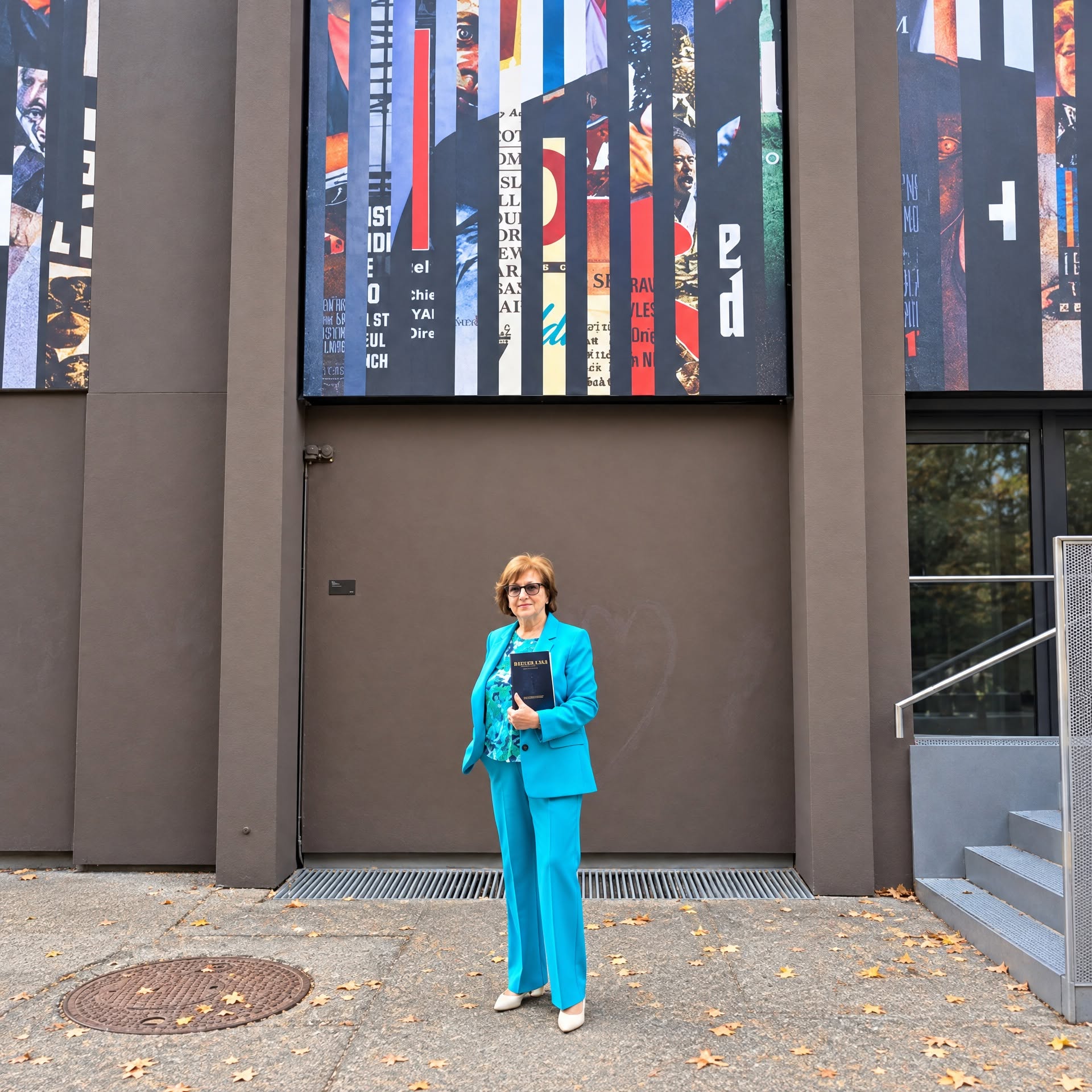
Portrait of the author, view of Maida, the presentation in the square, and the photograph taken in Lugano. Five files.
Download the photographs (ZIP)The book in PDF
The complete text, in Italian or English, is sent free of charge to journalists, researchers and librarians for reading purposes.
Request the bookCoverage so far
Links to the original sources, most recent first. Articles in Italian unless stated.
- Il Lametino · «Dimoranza», a word forgotten for four centuries becomes a bridge between Maida and the world30 September 2026
- LameziaInforma · Luca Cervadoro tries to bring «dimoranza» back into use30 September 2026
- Centro Calabria News · «Dimoranza», the forgotten word that comes back to life: from Maida to the world30 September 2026
- ilReventino.it · Dimoranza, from Maida: the story of the book before it became news, picked up in America17 September 2026
- La Voce di New York · Gay Talese's Ancestral Town of 4,000 Embraces Its 30,000-Strong Diaspora14 September 2026 · in English, by Grace Russo Bullaro
- La Voce di New York · Gay Talese's town in Calabria embraces its diaspora14 September 2026 · Italian edition
- LameziaTerme.it · Maida is officially «Città della Dimoranza»30 July 2026
- LameziaInforma · Maida leads the way with the Municipal Register of Dimoranti30 July 2026
A note on accuracy
The word has been submitted to the Accademia della Crusca and to Treccani. The Crusca replied by recalling the criterion that applies to every new word, usage by speakers over time; Treccani published the definition on its website on 30 September 2026 and will monitor the word's spread. Dimoranza has not entered any dictionary. It is not correct to write that the word has been «recognised» or «approved»; neither institution recognises words. Likewise, the Register of Dimoranti and the Certificate of Dimoranza are symbolic instruments with no legal effect on citizenship, and the UNESCO Commission has indicated a cataloguing path, not granted any listing.
Contacts
Replies to newsrooms within the day, weekends included. Time zone: Central European Time. Interviews in English or Italian.